Autism

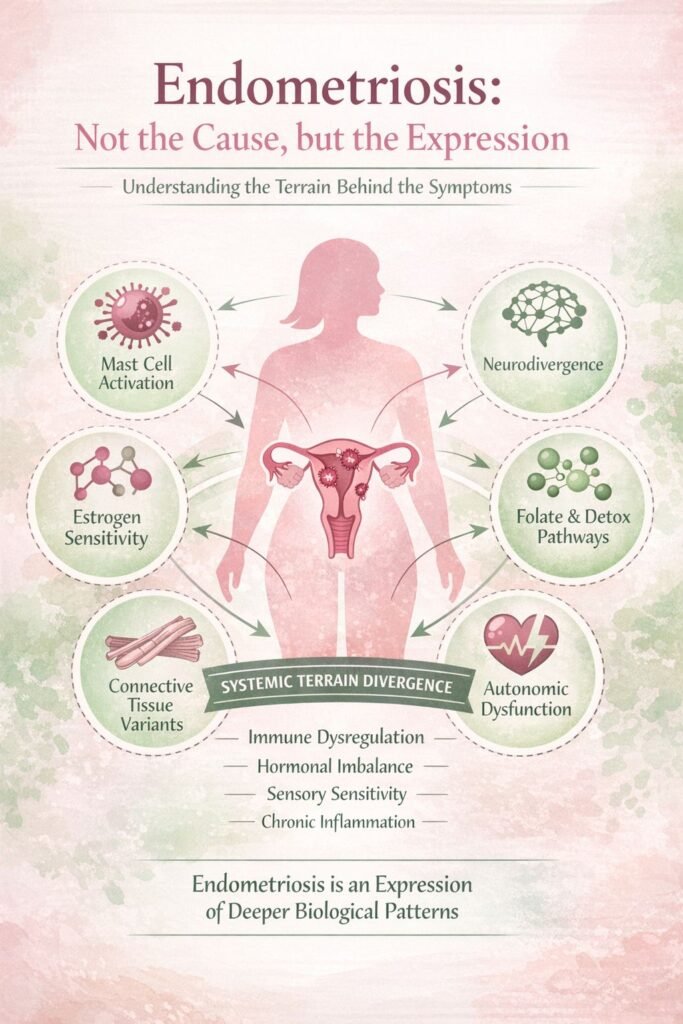
Endometriosis: not the Cause, but the Expression

© Alexandra Chambers | Neurotopia CIC | January 2026 Mainstream science has just “discovered” what many of us have known for years: that endometriosis is connected to more than the reproductive system. New research from Penn State finds that people with endometriosis have blunted blood pressure responses to physical stress – contradicting their initial hypothesis […]

Endometriosis: not the Cause, but the Expression Read More »

Dyslexia and Hyperlexia: A Spectrum of Expression

© Alexandra Chambers | Neurotopia CIC | January 2026 Most people think of hyperlexia and dyslexia as unrelated – one linked to precocious reading, the other to reading difficulty. However, what if they’re actually two ends of the same spectrum? Not disorders, but neurodivergent communication styles – shaped by the brain’s orientation toward language, meaning,

Dyslexia and Hyperlexia: A Spectrum of Expression Read More »

Another Piece of a Self-Made Jigsaw

© Alexandra Chambers | Neurotopia CIC | December 2025 The recent study from Yale (linked at the bottom of the post) claiming that autistic adults have reduced mGlu5 receptor availability may feel like a breakthrough to some. However, it’s another fragment in a long trail of fragmented science. For decades, autistic people have been used

Another Piece of a Self-Made Jigsaw Read More »

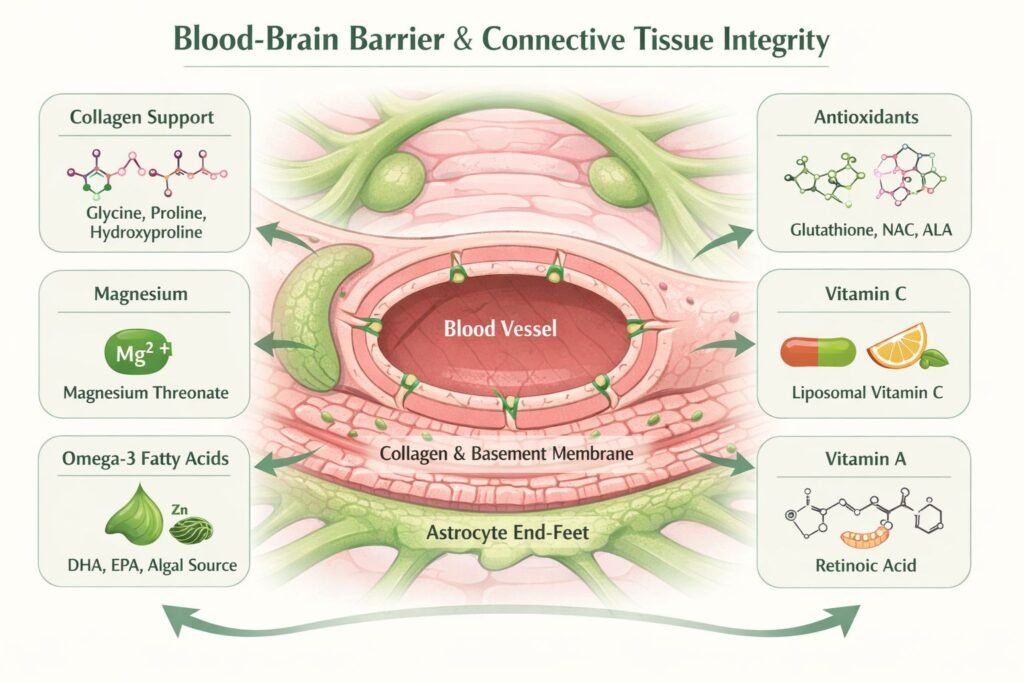
Strengthening the Blood-Brain Barrier & Connective Tissue in Divergent Bodies

© Alexandra Chambers | Neurotopia CIC | December 2025 Disclaimer: Every individual’s biology is unique. Genetic variation, methylation status, nutrient processing, and environmental factors all influence what supports or disrupts internal systems. What strengthens one person’s blood–brain barrier may overwhelm another’s. This article is written from a divergent genomics perspective, with emphasis on terrains that

Strengthening the Blood-Brain Barrier & Connective Tissue in Divergent Bodies Read More »

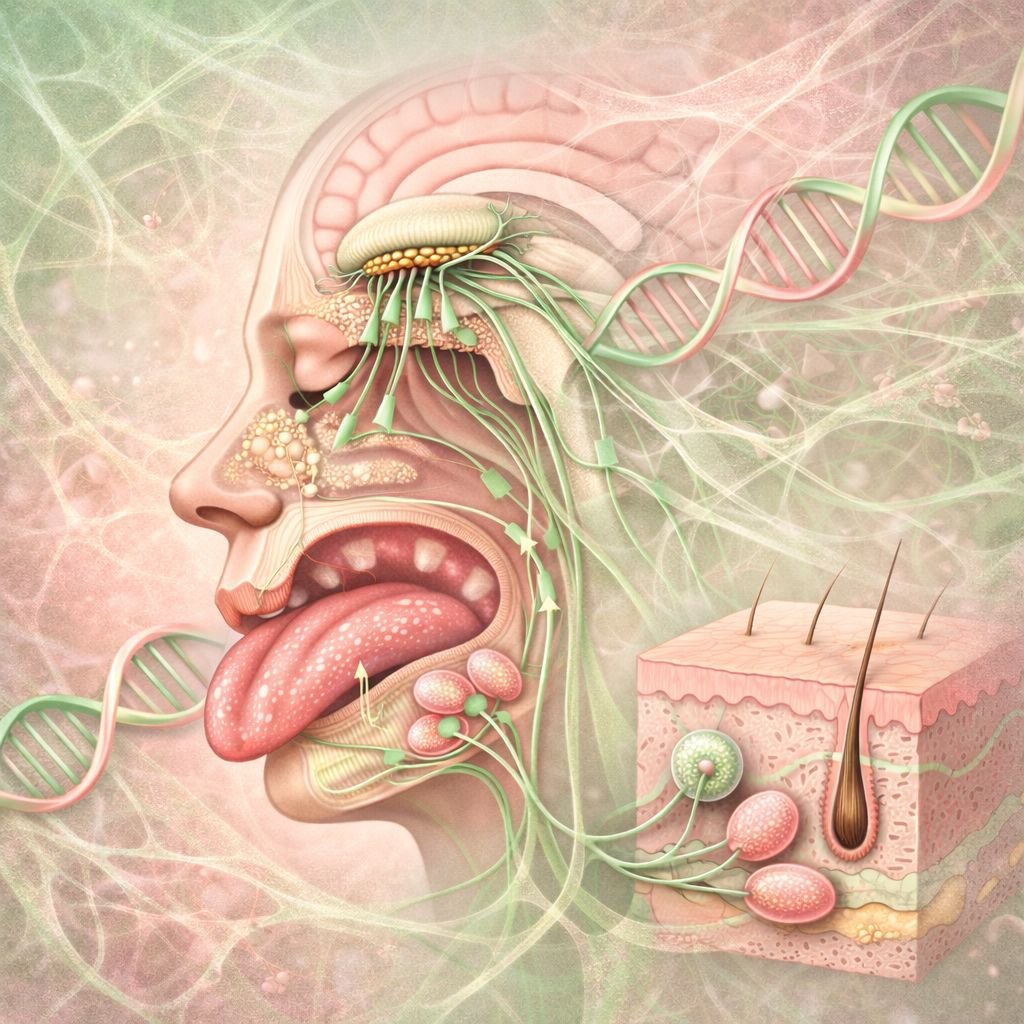
Connective Tissue, Sensory Terrain, and the Hidden Architecture of Perception

©Alexandra Chambers | Neurotopia CIC | December 2025 All research is available for PDF digital download on: https://studio.buymeacoffee.com/extras and all money goes directly to Neurotopia CIC to fund further research, thank you. Following the response to the previous exploration of connective tissue in the eyes and ears, this post continues the sensory map through the

Connective Tissue, Sensory Terrain, and the Hidden Architecture of Perception Read More »

The Eye and Ear: Connective Tissue Organs on a Divergent Spectrum

©Alexandra Chambers | Neurotopia CIC | January 2026 All research is available for PDF digital download on: https://studio.buymeacoffee.com/extras and all money goes directly to Neurotopia CIC to fund further research, thank you. Sensory overload is often described as a quirk of perception or a flaw in neurological filtering. However, when you stop treating the brain

The Eye and Ear: Connective Tissue Organs on a Divergent Spectrum Read More »

Autism, or Pathologised Evolution?

©Alexandra Chambers | Neurotopia CIC | October 2025 All research is available for PDF digital download on: https://studio.buymeacoffee.com/extras and all money goes directly to Neurotopia CIC to fund further research, thank you. Abstract Autism is widely classified as a neurodevelopmental disorder, yet accumulating evidence suggests it represents a modern diagnostic label applied to evolutionarily conserved,

Autism, or Pathologised Evolution? Read More »

Rethinking Folic Acid Fortification: a pharmacogenomic and policy-based reappraisal of neural tube defect trends

©Alexandra Chambers | Neurotopia CIC | September 2025 All research is available for PDF digital download on https://studio.buymeacoffee.com/extras and all money goes directly to Neurotopia CIC to fund further research, thank you. Abstract This investigative research critically re-evaluates the widely accepted attribution of reduced neural tube defect (NTD) rates in Canada to folic acid fortification.

Rethinking Folic Acid Fortification: a pharmacogenomic and policy-based reappraisal of neural tube defect trends Read More »